Most people choose a bookmark manager backwards. They pick the app with the slickest screenshots, import a few thousand links, and abandon it a month later when it turns out not to fit how they actually work. The takeaway up front: the best bookmark manager is the one that matches your use case and that you will open every day — not the one with the longest feature list. A tool you quit is worse than the browser bookmarks you already have.
This buying guide skips the hype. You'll get a short set of criteria that actually predict whether you'll stick with a tool, the main tool types compared side by side, an honest look at free versus paid, the red flags worth walking away from, and a scoring checklist so you can decide from evidence instead of a gut feeling.
Start with your use case, not the tool
Every "best bookmark manager" argument is really a disagreement about use case in disguise. Before you compare a single feature, answer three questions honestly:
- What do you save most? Articles to read, references to reuse, or links to share? A reading pile, a research library, and a shared resource hub have different priorities.
- How much, and how fast is it growing? A few hundred links behaves nothing like tens of thousands. Search and tagging only start to matter at scale.
- Solo or shared, and on how many devices? A private, single-laptop habit needs far less than a cross-device, multi-person collection.
Write your answers down. They turn an overwhelming market into a short list, because most tools are clearly built for one of these jobs and merely tolerate the others.
The criteria that actually matter
Ignore feature checklists and judge a bookmark manager on the handful of things that decide whether you keep using it. Each one comes with the reason it earns a place:
- Capture speed. If saving a link takes more than a click or two, you'll stop doing it. Low friction is the single strongest predictor of a habit that survives.
- Search and retrieval. A save you can't find later is worthless. Prefer full-text search over title-only search — the reason you saved something is often buried in the body, not the headline.
- Organization model. Tags let one link belong to several topics; folders force a single home. For a growing collection, flexible tagging beats deep folder trees.
- Cross-device sync. You save on your phone and act on your laptop. If sync is unreliable or costs extra, factor that in honestly.
- Offline access. If you read on a commute or a plane, a tool that saves the content — not just the URL — keeps working when the network doesn't.
- Data portability. Can you export everything to a standard file (HTML, JSON, CSV) and leave? This is your insurance against lock-in and shutdowns.
- Privacy. Know who can see your saves and whether your data is sold or mined. A private research library and a public sharing tool have very different defaults.
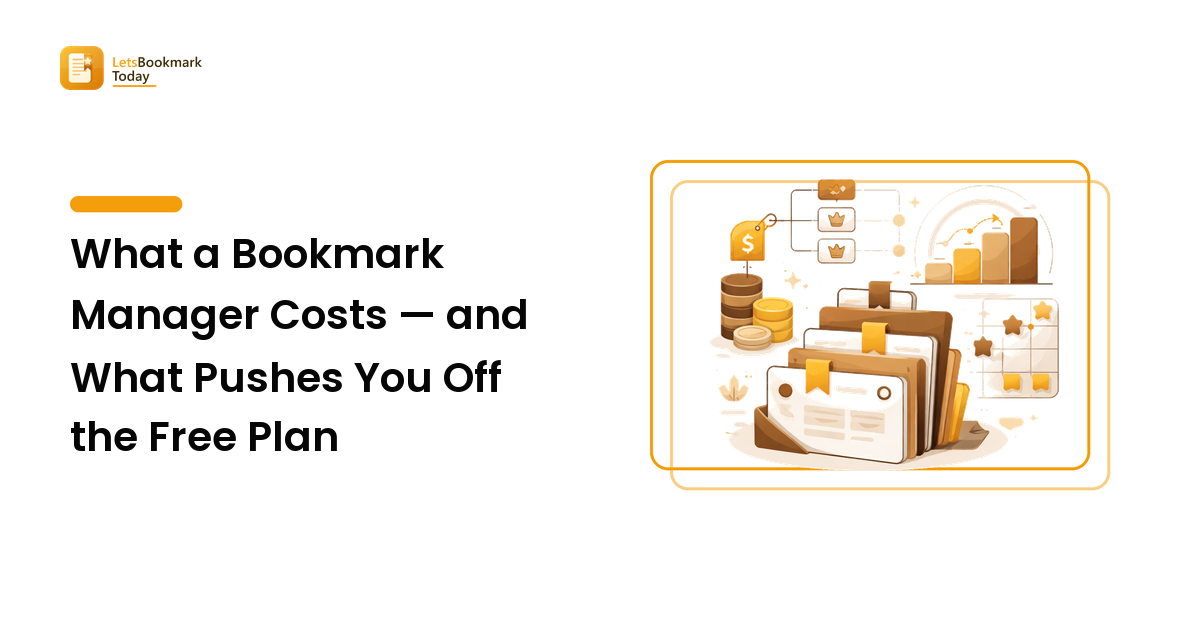
- Price fit. Free is fine for many people; paid is worth it for others. What matters is whether the cost matches the value you'll actually use.
Rank these by your answers from the previous section. A commuter weights offline access heavily; a researcher weights search; a team weights sharing and sync. There is no universal order — only the order your use case dictates.
Match the tool type to your need
Most bookmark managers fall into five types. Instead of comparing dozens of apps, first pick the type that fits your job, then choose within it.
| Tool type | Capture & saving | Search & tagging | Offline | Sharing | Best for |
|---|---|---|---|---|---|
| Browser built-in bookmarks | Fast | Weak | No | Poor | A small personal set, one browser |
| Dedicated bookmarking tool | Fast | Strong | Varies | Strong | Large collections and sharing |
| Read-it-later app | Fast | Medium | Yes | Medium | Mostly saving articles to read |
| Notes / knowledge app | Medium | Strong | Often | Medium | Links that live beside your notes |
| Self-hosted / open-source | Varies | Strong | Often | Varies | Data ownership and privacy |
The reasons behind the ranking: browser bookmarks win on being already there and instant, but are weak at search, tagging, and sharing, and tie you to one browser. A dedicated tool earns its place on strong tagging and fast search across a big library. A read-it-later app wins when most saves are things to read, because it strips clutter and works offline. A notes app is best when the link matters mostly for the thinking around it. A self-hosted option trades convenience for control — you run it, so you own the data. Pick the type that matches your dominant use case; a tool fighting its own design will always feel like friction.
Free vs. paid: what you're actually paying for
Plenty of people never need to pay, and honest advice says so. A free tier is usually enough if you save modestly, don't need full-text search across thousands of items, and can live with basic sync. Start free and let real friction — not fear of missing out — tell you when to upgrade.
Paid plans typically buy a few specific things: full-text search over large libraries, unlimited saves, reliable cross-device sync, offline archives of the full page, and backups or export guarantees. The reason to pay is when one of those directly removes a pain you feel weekly — not because a comparison chart has more checkmarks in the premium column. If you can't name the paid feature you'd use this week, you're not ready to pay yet.
Red flags and lock-in: ask before you commit
A few questions separate a tool you'll trust for years from one you'll regret importing into:
- Can you export everything? No clean export is a hard no — it means your library is a hostage. Portability protects you when the tool is sold, shuts down, or simply stops fitting.
- Is search full-text or title-only? Title-only search quietly fails you the day you can't remember the exact headline.
- How many steps to save? Count the clicks from "interesting page" to "saved." Every extra step erodes the habit.
- Where does your data live, and who can see it? Check the defaults for public versus private, and whether saves are used for advertising.
- Is it actively maintained? An abandoned tool is a slow-motion data-loss event. Signs of life — updates, support, a real company or community behind it — matter.
Once you've chosen a tool, the next job is making saves findable, which is a habit more than a feature — our guide to organizing bookmarks so you can actually find them later covers the tagging system that keeps any tool useful at scale.
A scoring checklist to decide with confidence
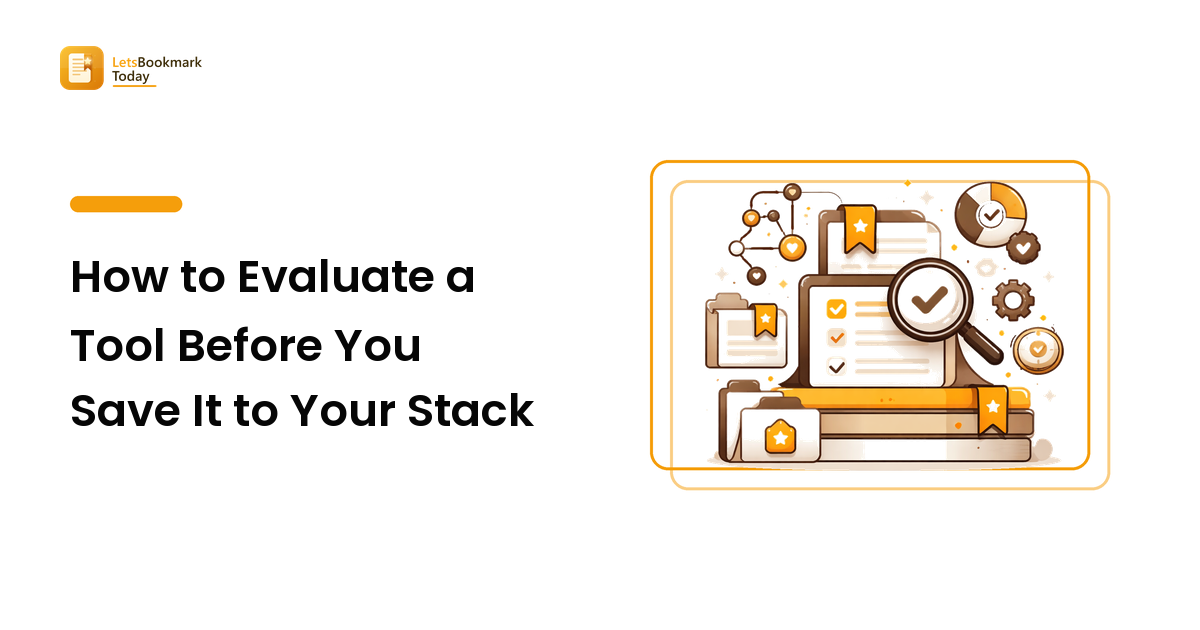
Shortlist two or three tools that pass the red-flag test, then score each against your weighted criteria:
- [ ] Capture takes one or two steps on every device I use.
- [ ] Search is full-text, not title-only.
- [ ] Organization (tags or folders) matches how I look for things.
- [ ] Sync is reliable across my devices.
- [ ] Offline access exists if I need to read without a connection.
- [ ] Export to a standard file is one click away.
- [ ] Privacy defaults match how sensitive my saves are.
- [ ] Price maps to features I'll genuinely use this month.
- [ ] I actually enjoy opening it — the intangible that decides daily use.
Whichever finalist checks the boxes that matter most for your use case is your answer. Then commit: import your existing bookmarks, save to it for two weeks, and judge by whether the habit sticks — not by the feature list that sold you.
FAQ
What should I look for in a bookmark manager?
Capture speed, real search (full-text, not title-only), a tagging or folder model that fits how you hunt for things, reliable sync, offline access if you need it, easy export, sane privacy defaults, and a price that maps to features you'll actually use. Weight those by your own use case rather than chasing the longest feature list.
Is a dedicated bookmark manager better than browser bookmarks?
For a small, single-browser set, built-in bookmarks are fine and already there. A dedicated manager wins once your collection grows or you need strong search, tagging, cross-device sync, or sharing — the areas where browser bookmarks are weakest. Choose by scale and need, not habit.
Are paid bookmark managers worth it?
They're worth it when a specific paid feature removes a weekly pain — full-text search over a large library, unlimited saves, reliable sync, or full-page offline archives. If you can't name the premium feature you'd use this week, start on a free tier and upgrade only when real friction tells you to.
What is the best bookmark manager?
The one that fits your dominant use case and that you'll open every day. A reader is best served by a read-it-later app, a researcher by strong search and tagging, a team by sharing and sync. There's no single winner — match the tool type to the job.
Can I move my bookmarks from one manager to another?
Usually yes, if both support standard export and import (HTML, JSON, or CSV). Before you commit to any tool, confirm you can export everything — that portability is your protection against lock-in, shutdowns, or simply outgrowing your first choice.
Choose once, then build the habit
Choosing a bookmark manager isn't about finding the most powerful app — it's about matching a tool to how you actually save, search, and share, then sticking with it long enough for the habit to form. Define your use case, score two or three honest finalists against the criteria that matter to you, and commit. For more practical, vendor-neutral ways to capture, organize, and revisit what you find online, visit Lets Bookmark Today.